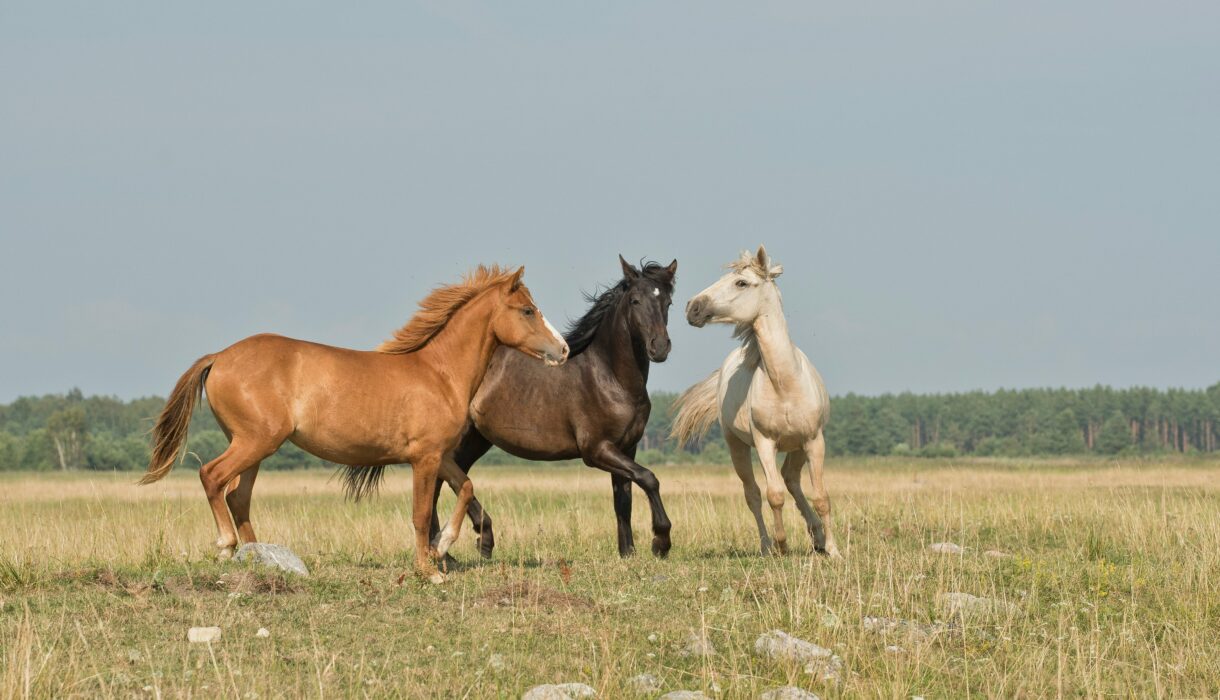
Is My Horse Being Disrespectful? What Horse Behavior Actually Means
Posted in :

A Guide to Understanding Equine Psychology, Behavior & Dominance
“My horse is so disrespectful. He knows exactly what he’s doing!”
Have you ever heard this phrase at the barn – or even caught yourself saying it?
It’s one of the most common narratives in the equestrian world.
When a horse doesn’t behave the way we expect, it’s easy to assume they’re being stubborn, dominant, or even trying to test us.
But here’s the truth:
Your horse is not disrespectful.
Not now. Not ever.
What we call “disrespect” is almost always a misinterpretation of behavior – and this misunderstanding can harm the horse-human relationship.
Let’s dive into why this matters, what science tells us about equine psychology, and how you can transform your approach to training and partnership.
The Problem With “Respect” in the Horse World
The idea of respect is deeply ingrained in horse training culture.
We’re taught that a horse must “respect” us in order to be safe, cooperative, and rideable. But this creates a power dynamic: you versus your horse.
The issue?
Horses don’t think in terms of respect or disrespect.
These are human concepts, not equine ones.
When we label a horse as disrespectful, we:
Project human emotions onto them (anthropomorphism),
Blame them for behaviors that are rooted in fear, confusion, or unmet needs,
And often respond with punishment or correction rather than understanding.
Instead of solving the problem, this cycle creates more stress and conflict – for both you and your horse.
The Science of Equine Behavior: What’s Really Happening
Horses are prey animals with highly developed nervous systems designed for survival, not rebellion.
Every behavior has a reason. Understanding these reasons is the key to creating harmony.
1. Behavior Is Communication
Your horse doesn’t have words – their body language is their voice.
Pinned ears, tail swishing, moving away, even biting or kicking: these are messages, not attacks.
Studies on equine body language (e.g., Wathan & McComb, 2014) show that horses use subtle signals to communicate discomfort, confusion, or stress long before they resort to what we call “problem behaviors.”
Tip: Start observing small signals like blinking, ear flicks, and tension around the muzzle. These early signs tell you how your horse feels – before things escalate.
2. Learning Theory: Why Correction Doesn’t Work
Modern equine science relies on learning theory, the same principles used in behavioral psychology.
Behaviors are shaped by consequences, not moral judgment.
Positive reinforcement: Adding something pleasant (e.g., food, scratches) to increase a behavior.
Negative reinforcement: Removing something unpleasant (e.g., pressure) to increase a behavior.
Punishment: Adding or removing something to decrease a behavior.
When we focus on “correcting disrespect,” we often rely on punishment – which suppresses behavior temporarily but does not teach the horse what to do instead.
This can lead to frustration, fear, or even dangerous escalation.
The alternative?
Guide your horse toward what you do want using clear, positive reinforcement and thoughtful setup.
For example:
Instead of smacking a horse for biting, teach them a calm behavior like targeting a cone for a reward.
Instead of driving them forward with escalating pressure, reinforce even the smallest try toward the desired behavior.
3. Emotion Drives Behavior
Horses are deeply emotional beings.
Research shows they not only experience fear, joy, and frustration but also mirror human emotions (Keeling et al., 2009).
When a horse seems “defiant” or “dominant,” what you’re really seeing is usually:
Fear of the situation or past trauma,
Confusion about what’s being asked,
Frustration when their communication is ignored,
Pain or discomfort (always rule out physical issues first!).
Instead of asking, “How do I make my horse stop this behavior?”, shift to:
“What emotion is driving this behavior – and how can I help my horse feel safe and understood?”
From Conflict to Cooperation: A New Mindset
If we abandon the idea of disrespect, what takes its place?
A mindset of guidance, partnership, and trust.
Here’s the shift in practice:
Old way: “Don’t let your horse get away with that!” → Correction and control.
New way: “Show your horse what you want instead.” → Clarity and support.
Example:
You want your horse to stand still for mounting. Instead of punishing them for moving, break the task into small, achievable steps. Reward calm standing. Build success layer by layer.
The result? A confident horse who chooses cooperation.
Practical Steps You Can Take Today
Observe Without Interfering
Spend time just watching your horse without interacting.
This removes the unconscious micromanaging we all do and helps you see their natural behaviors objectively.Describe, Don’t Label
Replace words like stubborn or disrespectful with simple, factual descriptions.
Example: Instead of “He’s being pushy,” say, “He stepped into my space.”
This keeps your thinking clear and curious.Learn Equine Body Language
Understanding their communication is essential for safety and connection.
Horses shouldn’t have to conform to our world – we must learn their language first.Focus on What You Want, Not What You Don’t
Always guide your horse toward desired behaviors instead of simply stopping unwanted ones.
Tools like target sticks create positive motivation rather than fear.Find the Right Support
Work with a professional who shares your ethical values and can challenge you to look deeper – like a certified equine behavior consultant.
A trusted guide helps you see what you can’t see on your own.
Why This Matters
When we stop labeling horses as disrespectful, we open the door to true partnership.
We begin to see them not as opponents but as mirrors, teachers, and fellow sentient beings.
Changing the narrative doesn’t just help your horse – it transforms you.
You’ll develop confidence, clarity, and compassion, both in the barn and in life.
And in doing so, you become part of a movement: one that rejects domination and embraces understanding.
Take the Next Step
If you’re ready to move beyond frustration and confusion, I can help.
Through personal coaching and 1:1 consultations, we’ll:
Analyze your horse’s behavior together,
Identify the root causes of challenges,
And create a clear, ethical plan for lasting change.
Whether online or in-person, these sessions give you the insight and confidence to build the partnership you’ve always dreamed of.
✨ Start today: Book your first session or a free discovery call.
Click here to schedule
Final Thought
Your horse doesn’t need to “respect” you.
They need you to listen, guide, and understand.
When you make this shift, you’ll discover a deeper connection than you ever imagined – and a relationship built on joy, not fear.
A brutally honest guide to what’s really going on with your horse – and how to finally see him clearly.
This ebook is a brutally honest guide to what’s really going on with your horse – and how to finally see him clearly.
Let’s get real. You love your horse. You try your best. And yet … there are days you walk away from a session feeling like a failure. You’ve second-guessed yourself. You’ve wondered if maybe you’re just not good enough. Sound familiar? If you’ve ever felt caught between deep love for your horse and complete confusion about their behavior, this guide is for you. It’s here to help you stop guessing, stop blaming, and start understanding.
GET YOURSELF THE COPY NOW ↓